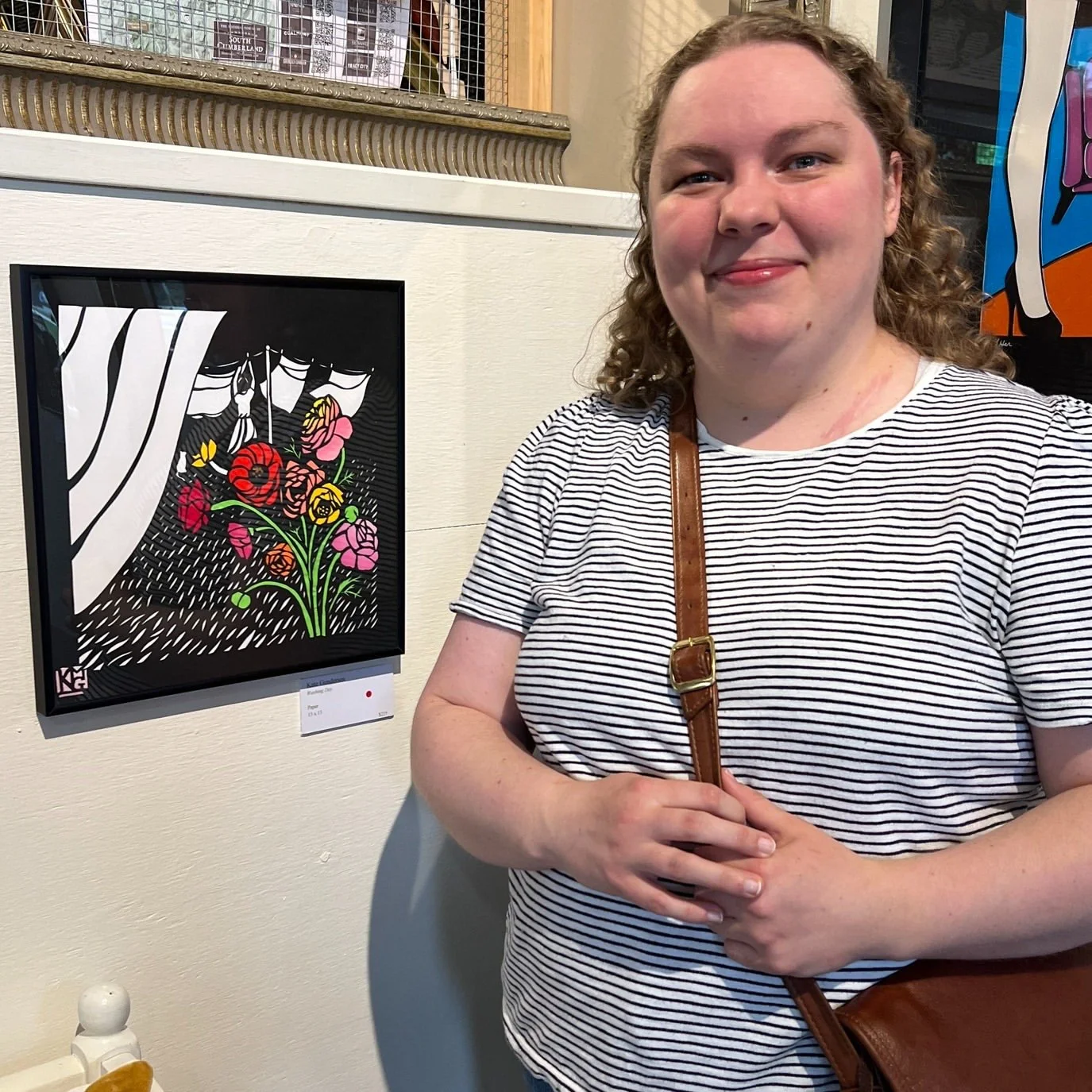
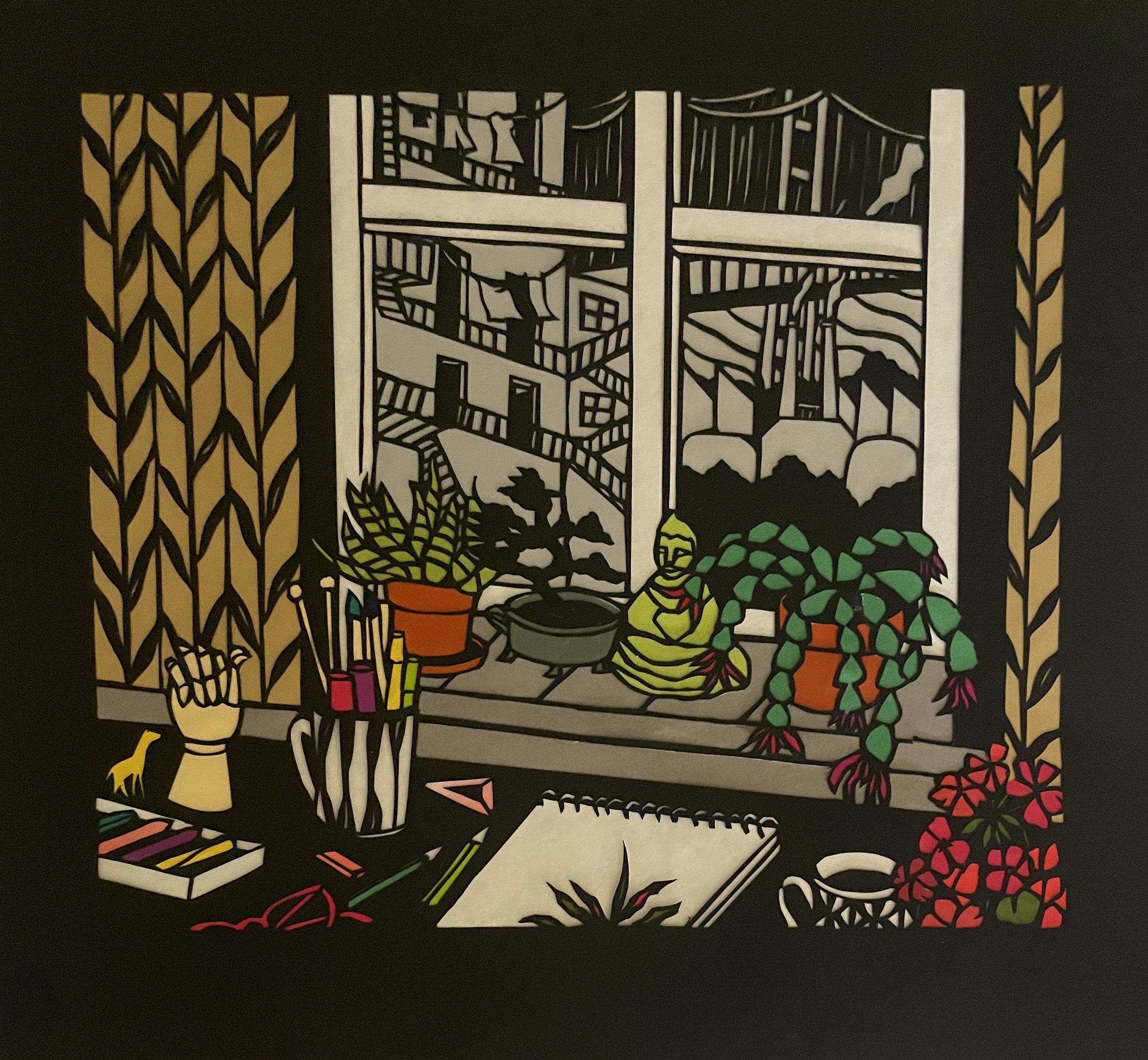
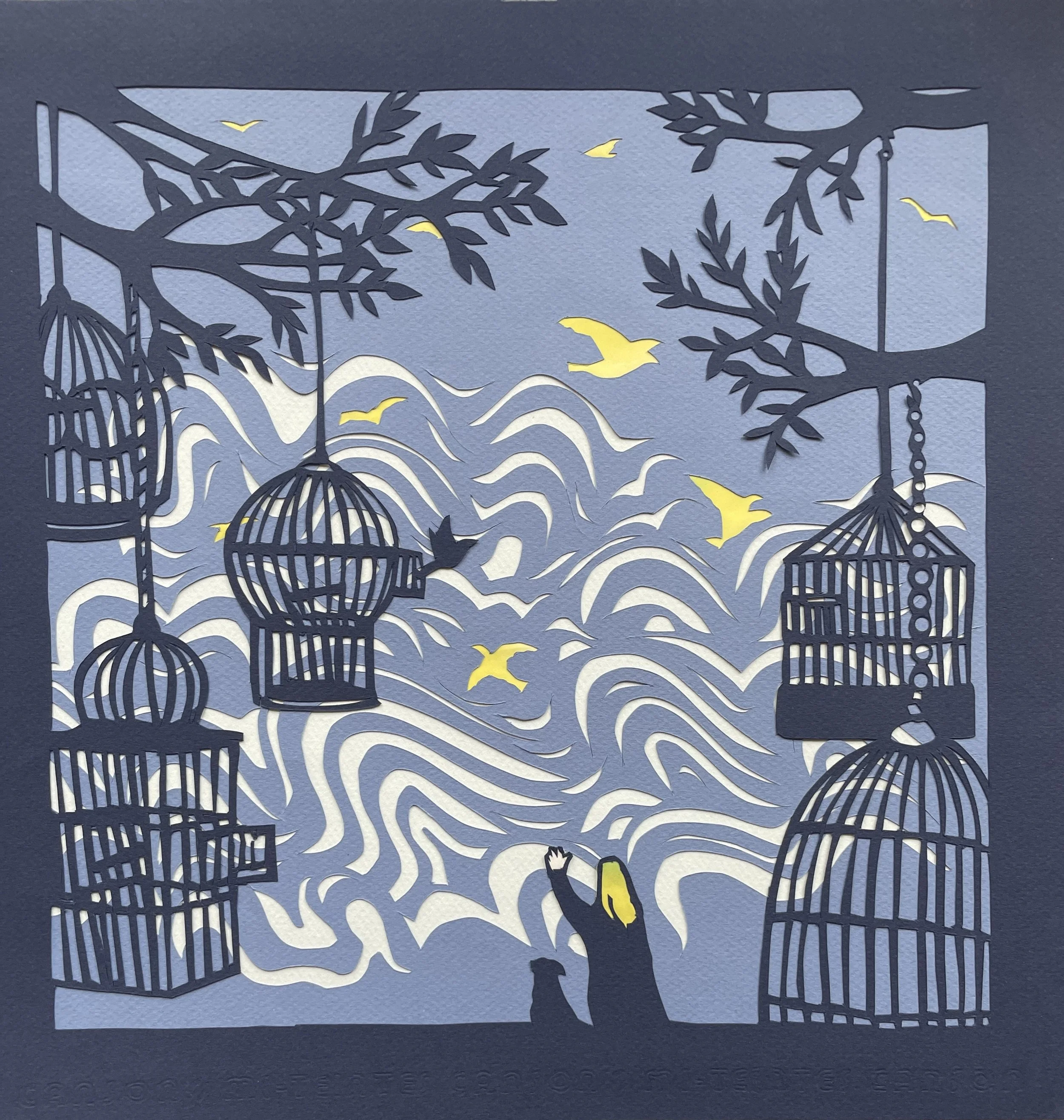
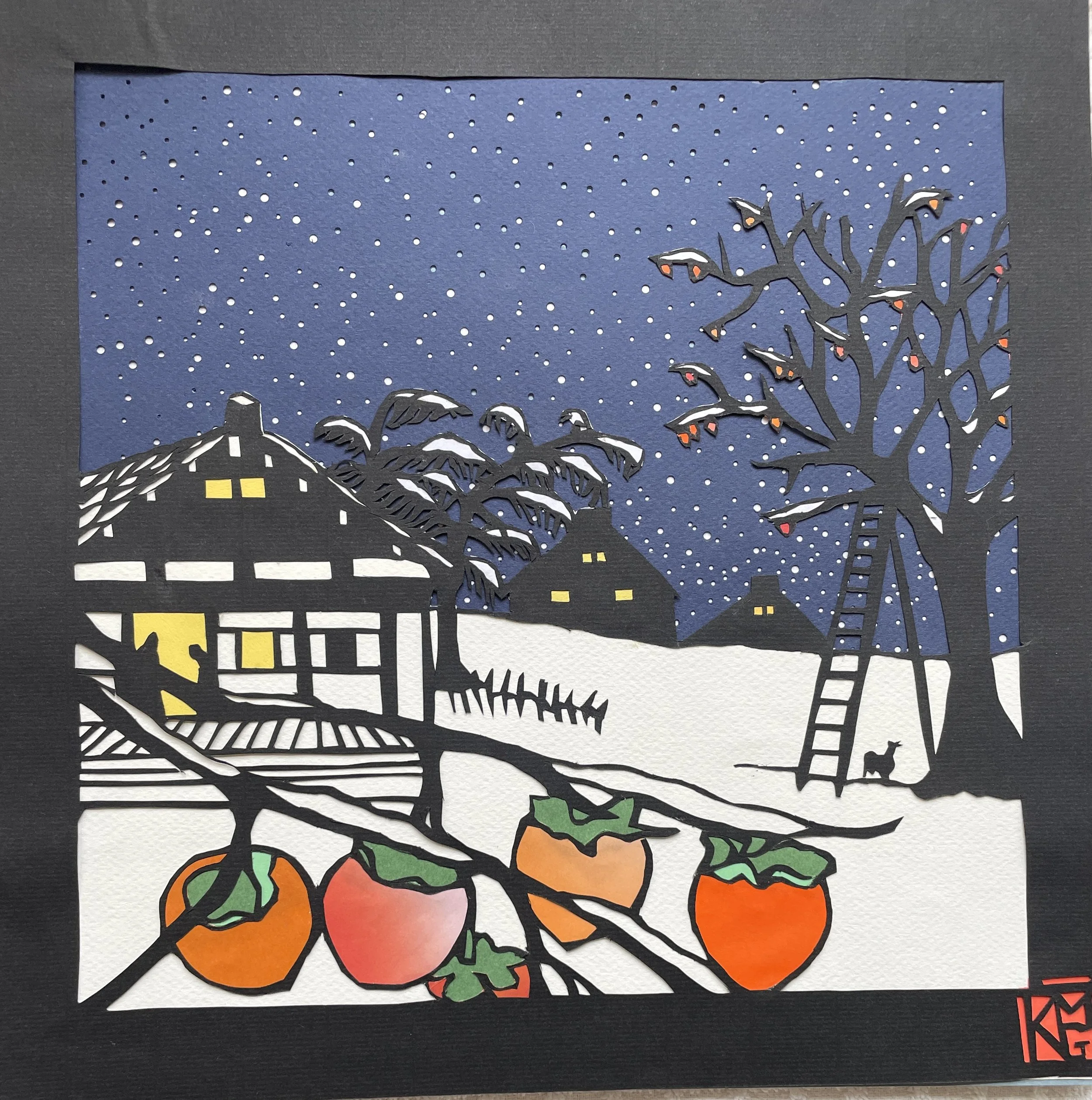
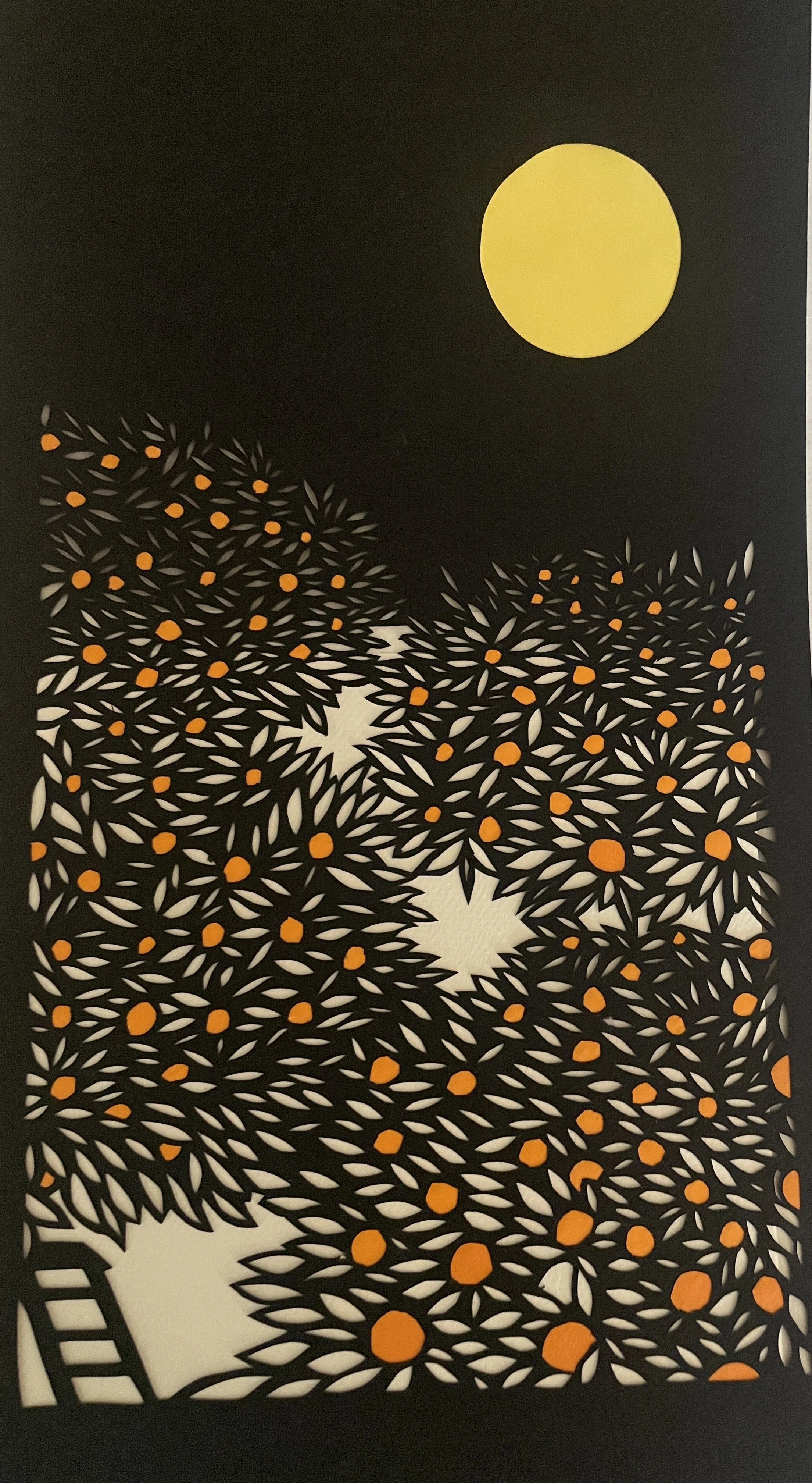
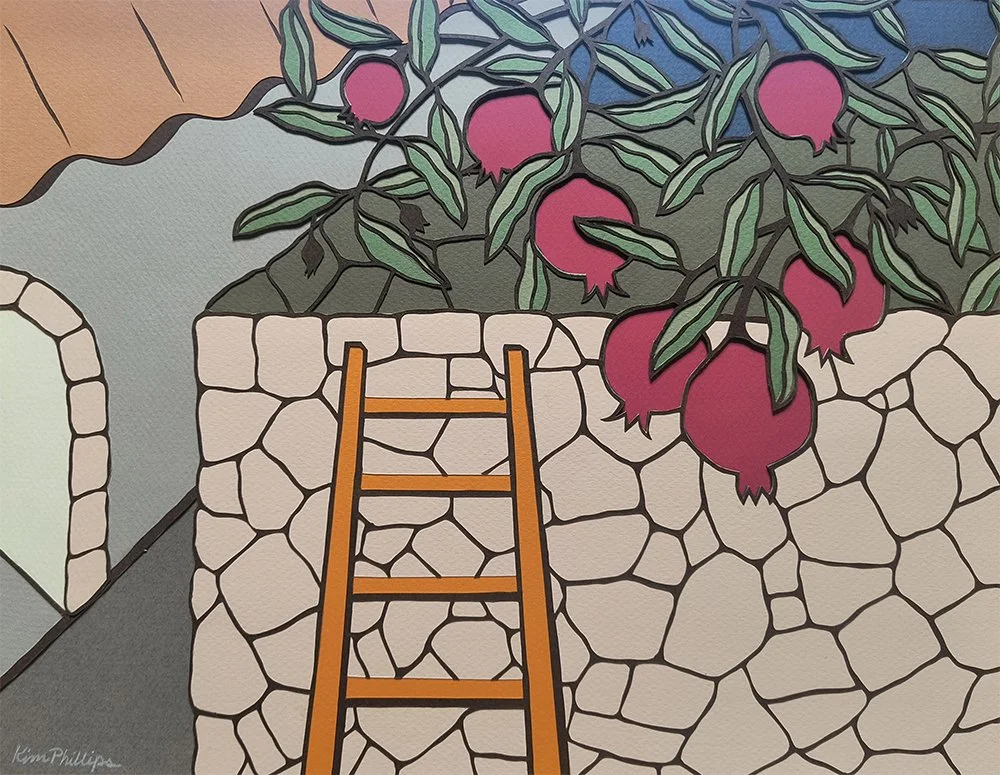
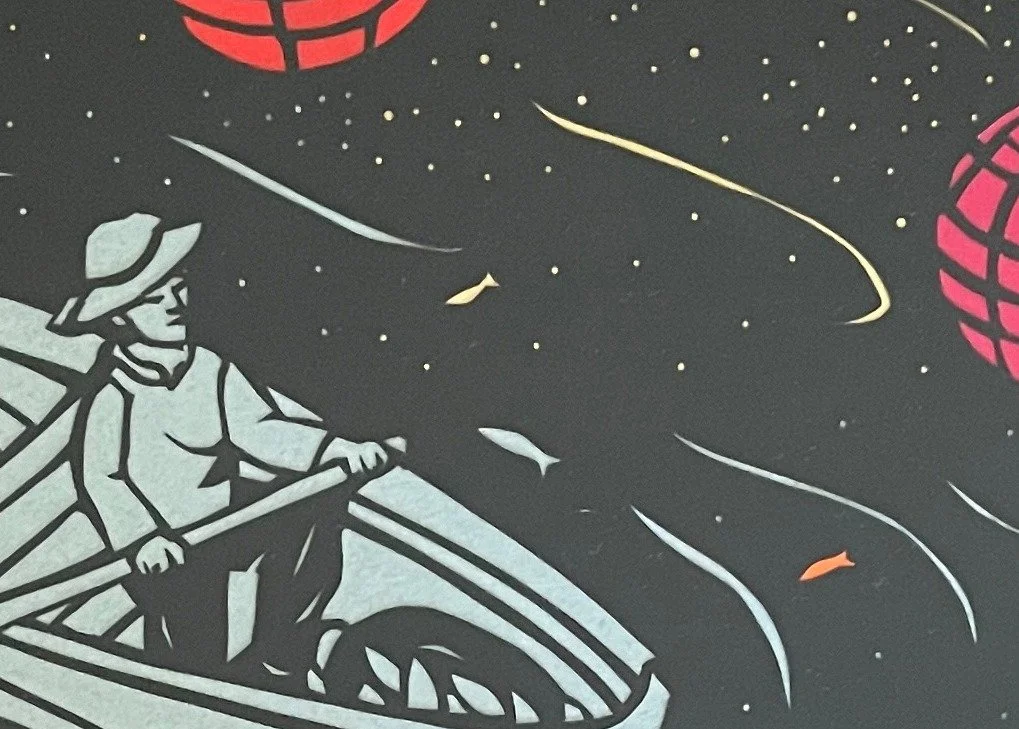
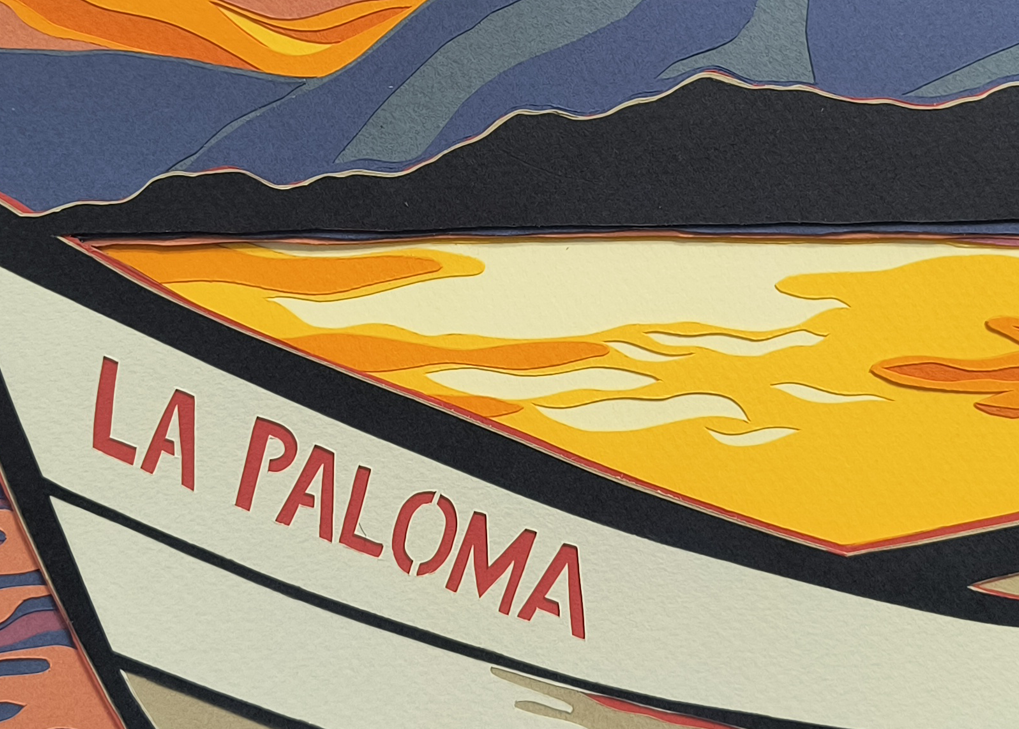
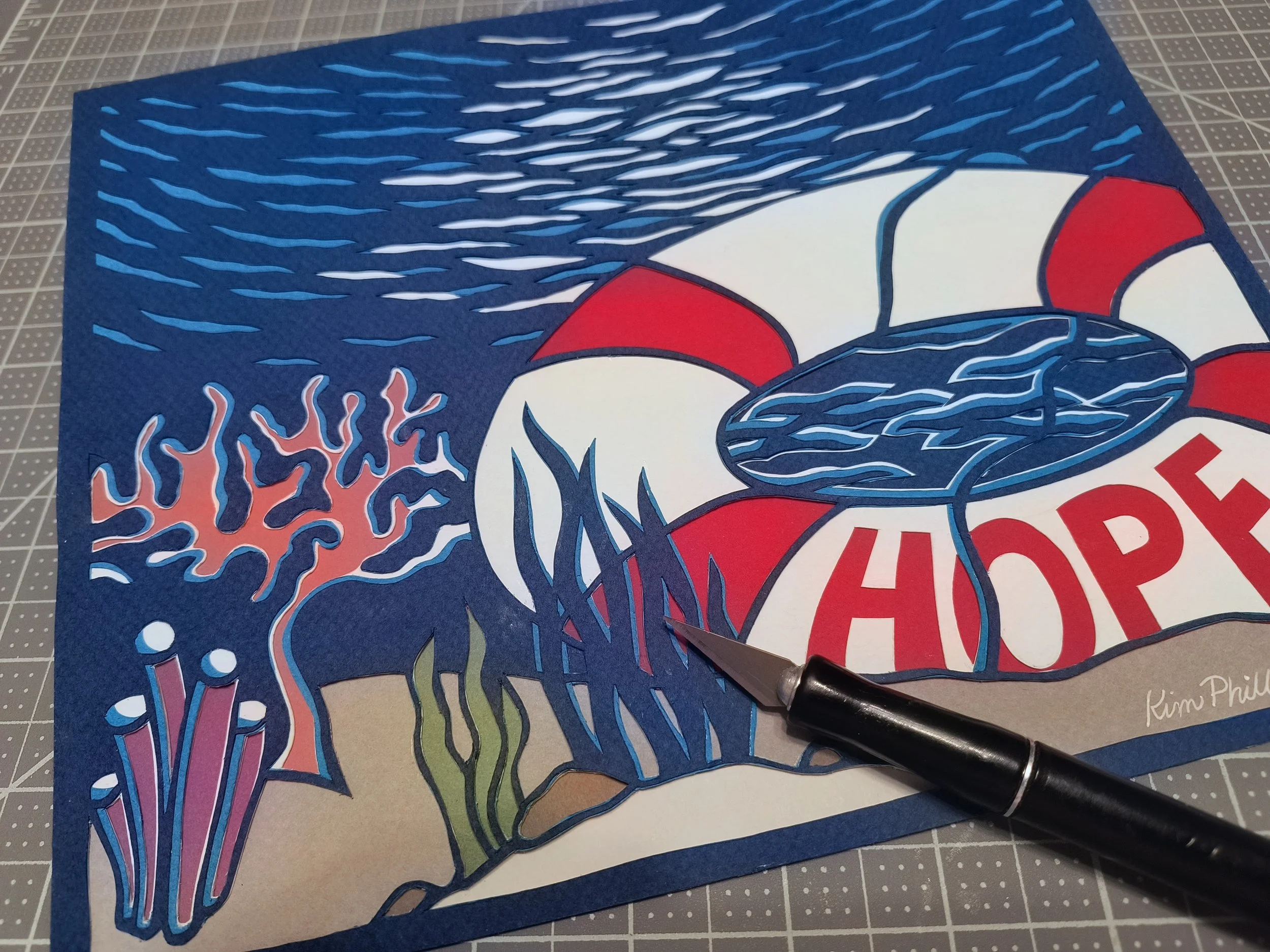
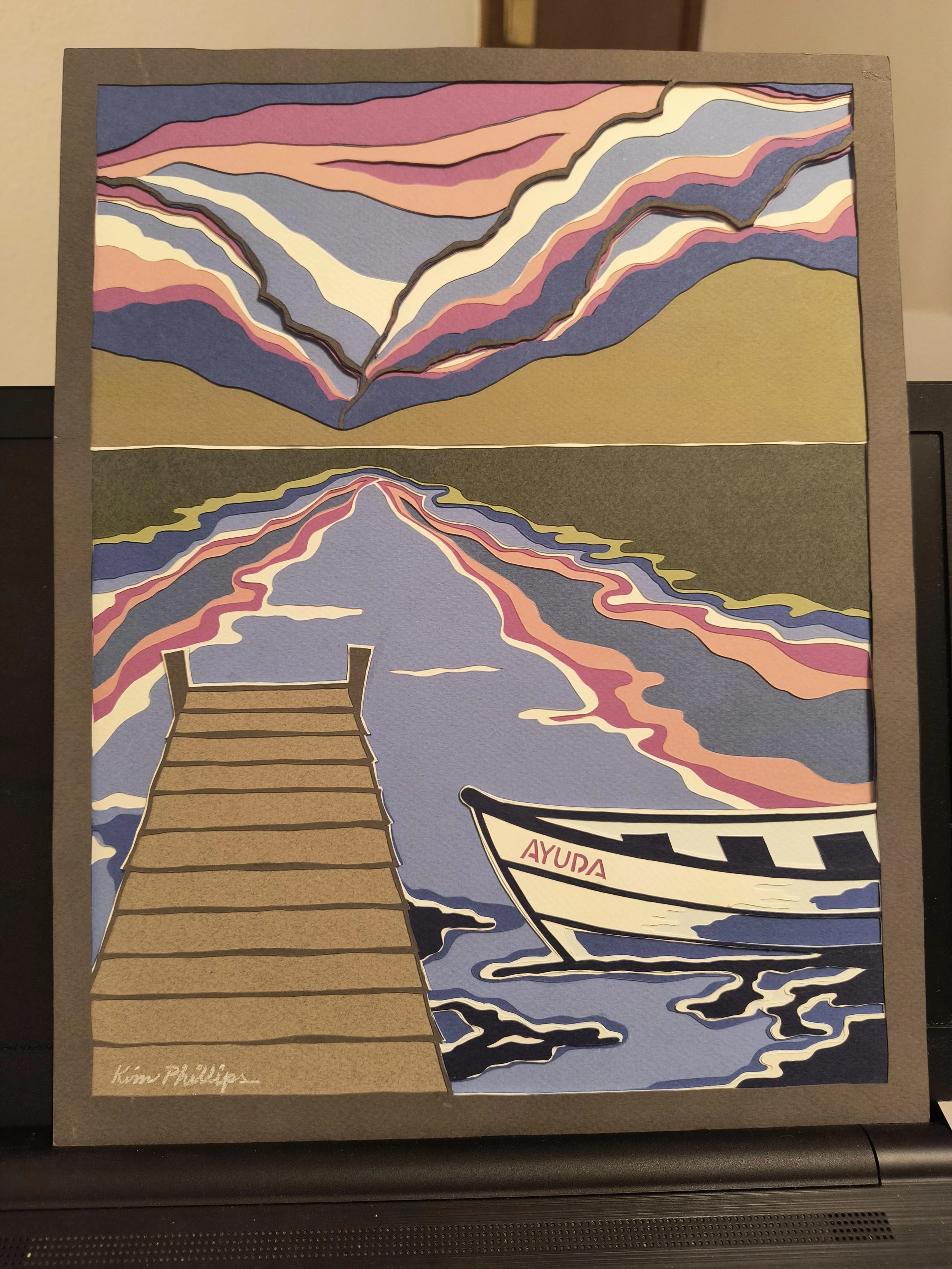
Frame Gallery Gifts and Art will host an opening reception for its next art exhibition on Friday, May 1, from 5:00 to 6:30 p.m. in Sewanee. The show, “A Lamp, a Ladder, or a Lifeboat: Meditations in Paper, inspired by Rumi,” features the work of two paper-cutting artists with ties to the area, Kate Gundersen and Kim Phillips. The public is invited to attend the reception and view the exhibition, with light refreshments served. The artists will speak briefly at 5:15 pm about their work. The exhibit continues through May 30.
Gundersen came up with the title for the show that refers to the Rumi quotation: “Be a lamp, or a lifeboat, or a ladder. Help someone's soul heal. Walk out of your house like a shepherd.” Gundersen says, “The Rumi quote seemed relevant and uplifting in today's grim geopolitical landscape. I like the timeless and symbolic nature of a lamp (light), as well as encouragement to be a ‘helper’–as illuminator, booster, or refuge. I thought it would be fun to work these familiar yet metaphorical images into a variety of settings.”
Gundersen and Phillips both share diverse backgrounds and an early love of art. Holding a bachelor’s in Studio Art, Gundersen discovered paper cutting at a local Shakerag workshop in Sewanee, Tennessee, while Phillips found the art of paper cutting during a visit to Jerusalem. When she came to the South Cumberland Plateau, Phillips says, “Imagine my surprise when I moved here and found there was another paper cutter on the Mountain!"
Harriet Runkle, owner of Frame Gallery Gifts and Art, says, “Paper cutting is a fascinating art form to explore and experience, and one we don’t see very often. I’m excited to see how the pieces come together to create a cohesive and engaging exhibition.”
The ancient tradition of paper-cutting first appeared during the 4th-century Han dynasty in China. While the art has evolved over the centuries influenced by cultural preferences, the Guild of American Papercutters states, “One traditional distinction most styles share in common is that the designs are cut from a single sheet of paper as opposed to multiple adjoining sheets as in collage, although one style of papercutting, découpage, or ‘cutting-out,’ builds up an image or pattern in a way somewhat similar to collage.”
Jalal ad-Din Muhammad Rumi (Rumi meaning “the Roman”) was a Persian poet and Sufi master born who lived from 1207 to 1273. According to the BBC, Rumi is the most popular poet in the United States, with millions of copies of his poetry sold. His poems have gained immense global popularity by transcending religious and cultural boundaries.
About the Artists
Kate Gundersen
Raised on an apple and raspberry farm in northern California without the benefit/liability of technology, Kate Gundersen spent time making things with what was at hand, the natural world, and her imagination as companions. After a bachelor’s in Studio Art at Grinnell College, a stint in the Peace Corps in West Africa, and years working as a psychotherapist in New Orleans and Sewanee, Gundersen was introduced to paper cutting at a Shakerag workshop in Sewanee, Tennessee. She fell in love with the simplicity of this ancient art, as well as its graphic and contemporary possibilities. The intensity of concentration required to paper-cut feels like meditation and brings her back to her childhood of solitary, creative exploration.
Gundersen’s pieces tell stories, leading the viewer into hidden worlds, sacred moments, and whimsical situations, inviting them to notice beauty in the small and ordinary.
Kim Phillips
Raised in Nashville, Kim Phillips moved to Monteagle in 2017, then to Cowan, Tennessee. She reflects, "I always did art of some kind, from the time I could hold a crayon. Mostly, I made very realistic drawings of people and things. An art teacher in college told me nobody would care about my representational art."
After a demanding career in marketing for a major financial institution, Phillips found the art of papercutting in Jerusalem. She says, "Papercutting has been done by every culture that has had paper, but in Judaism, papercutting holds a special place." Most of Phillips’ papercuts are based on religious texts.
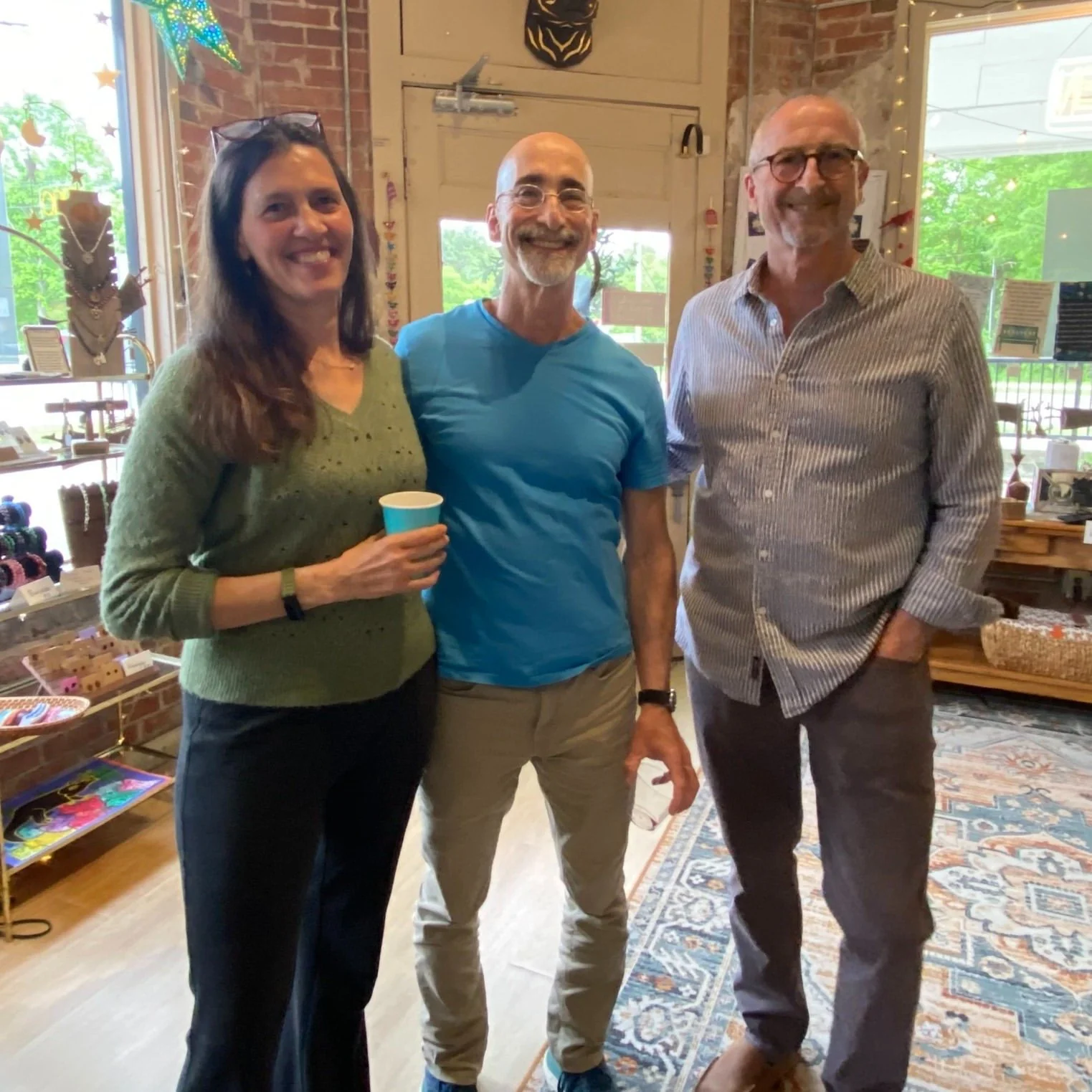
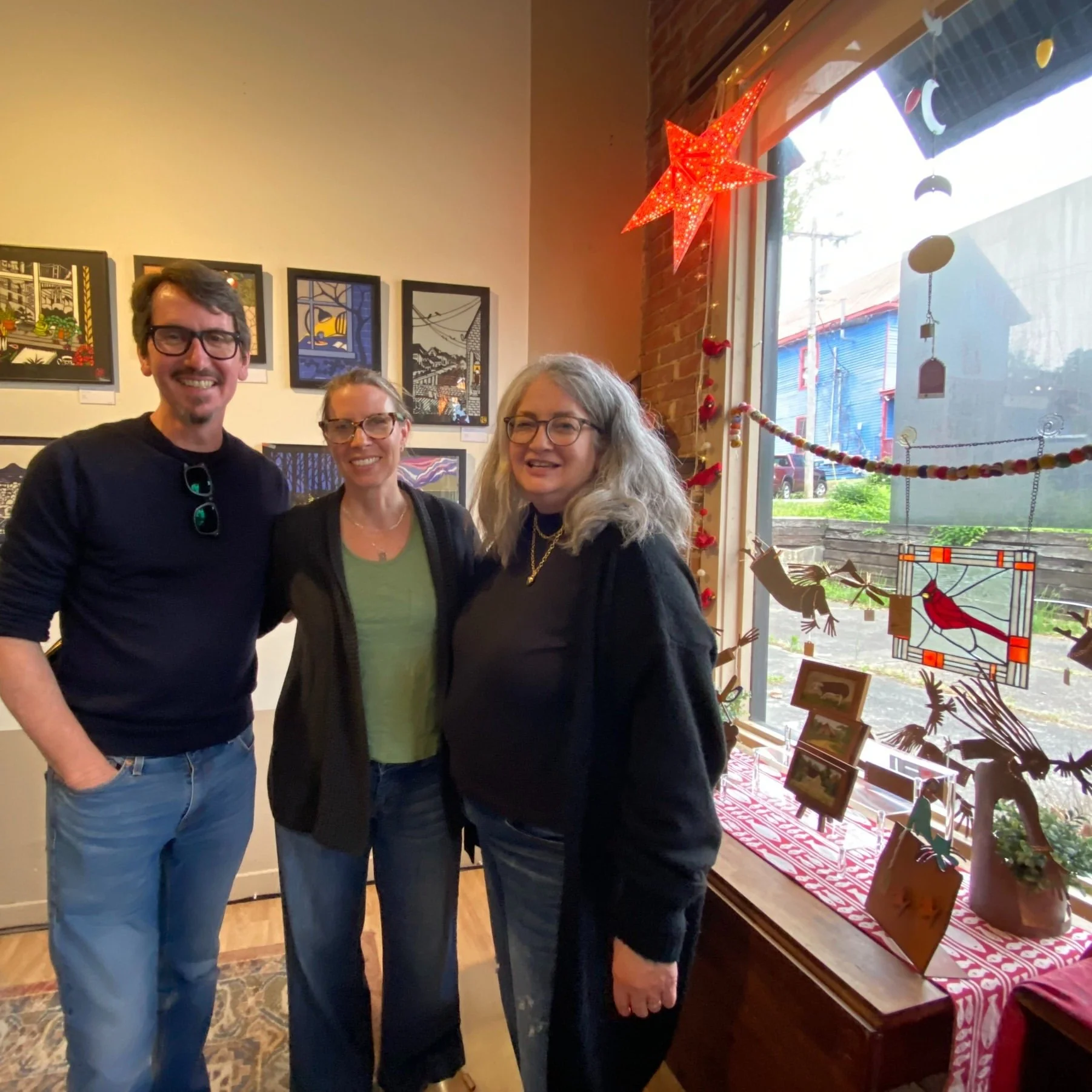
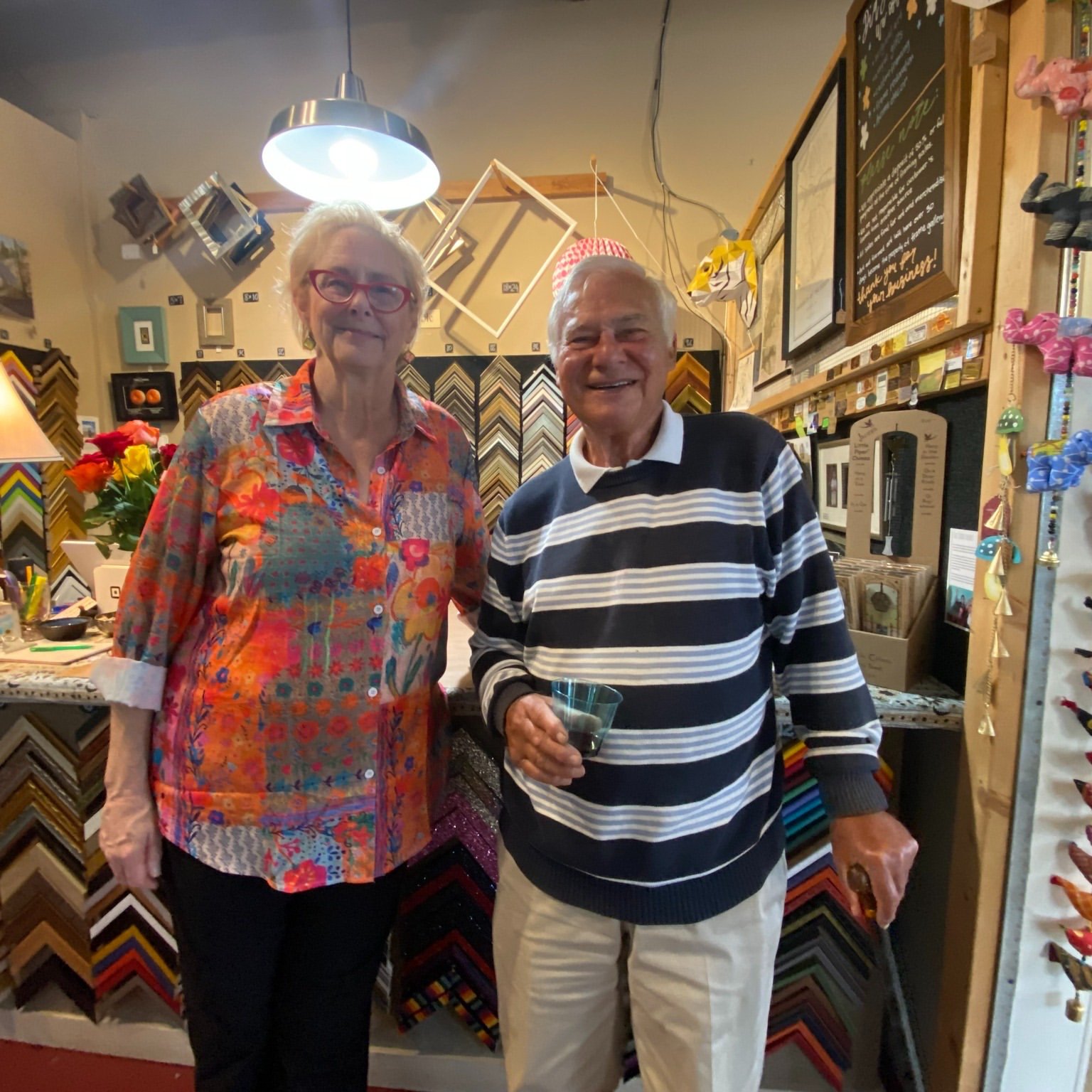
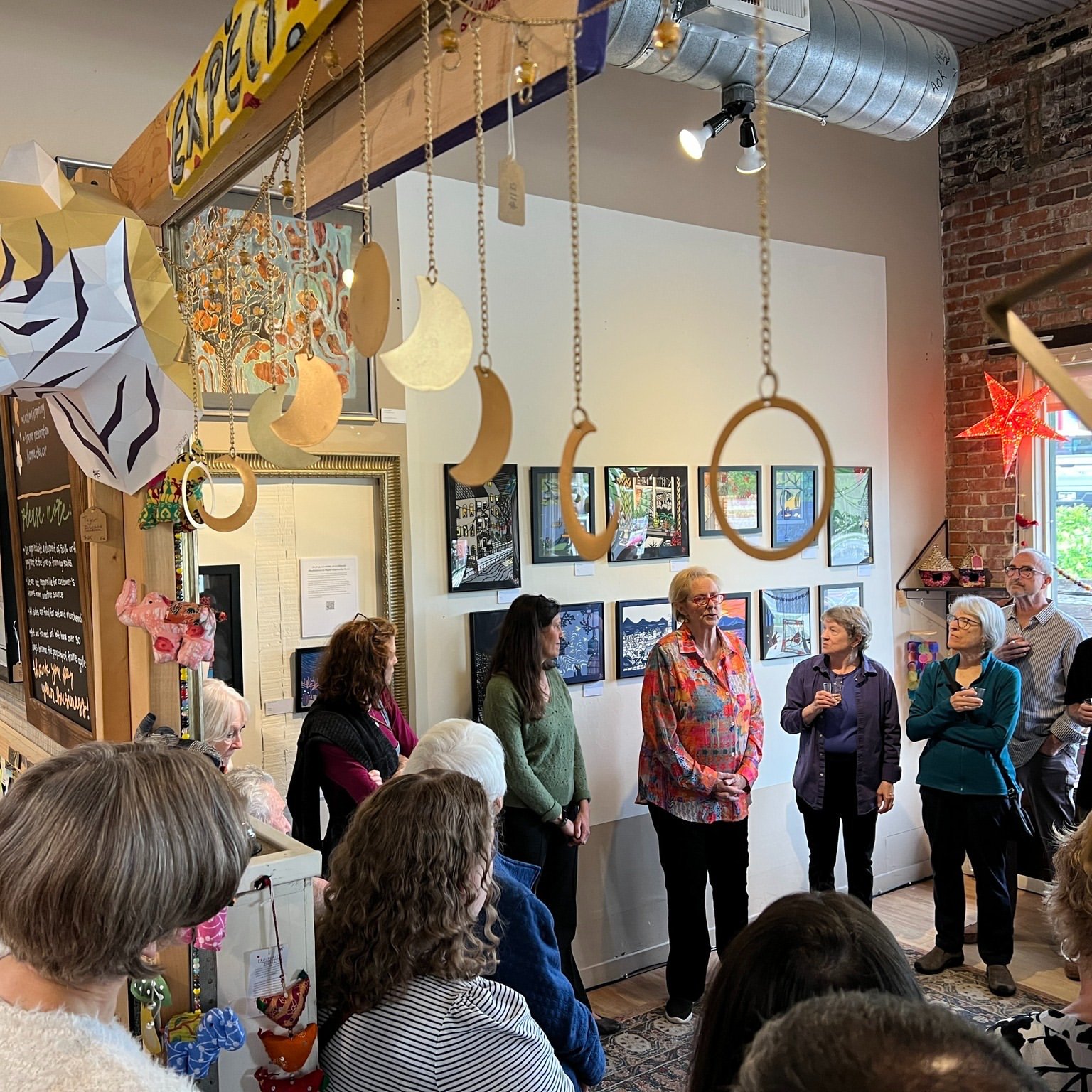
Reception Photos
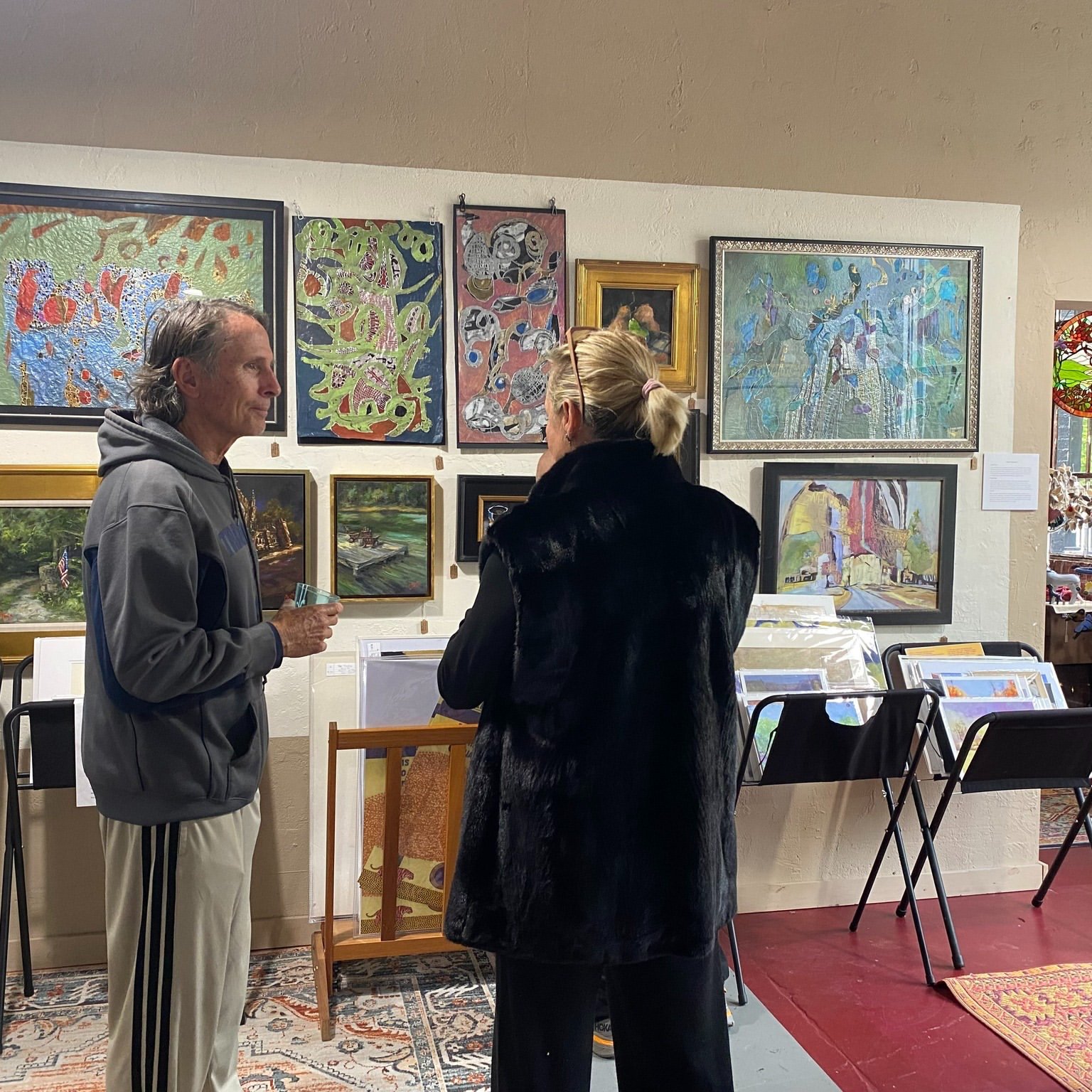
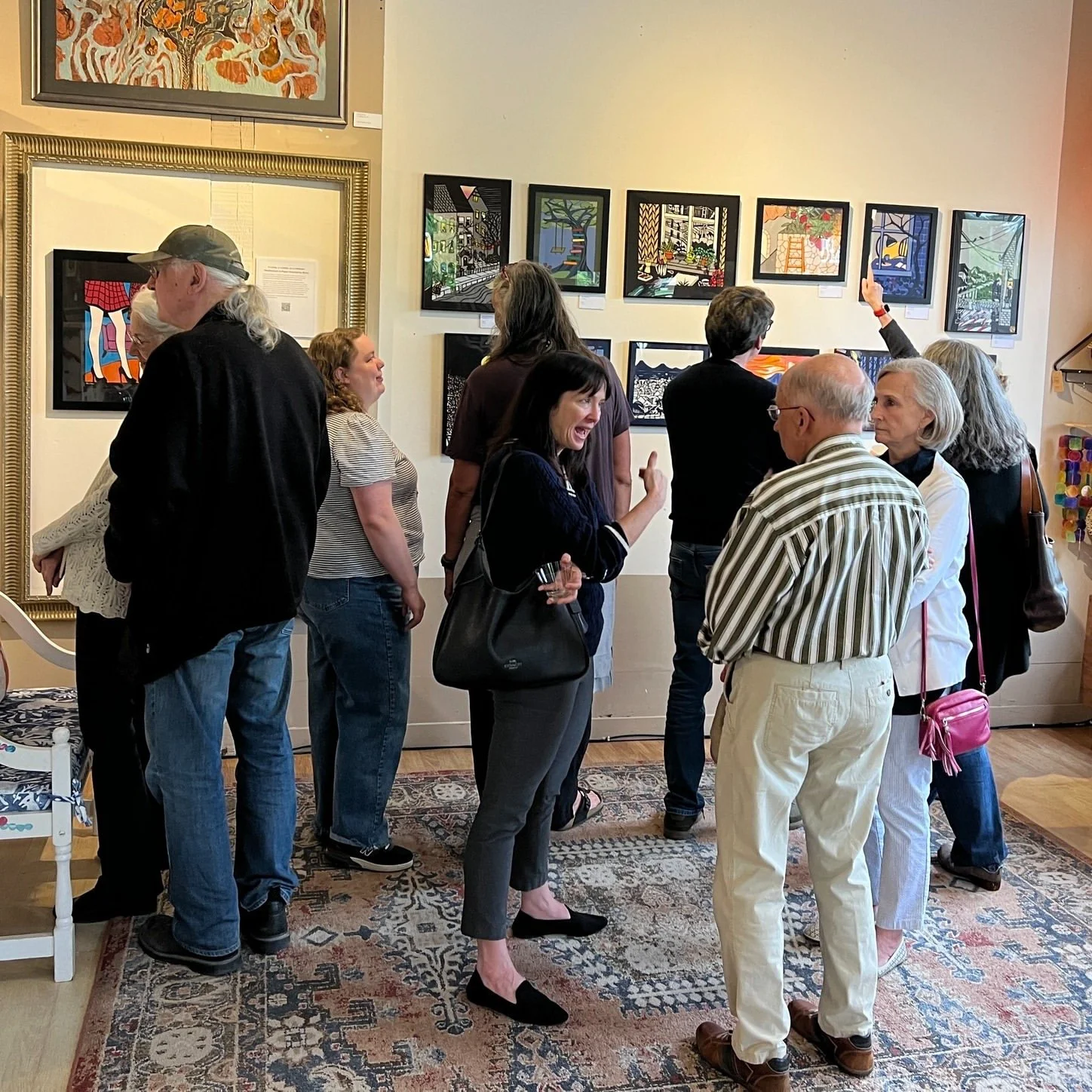
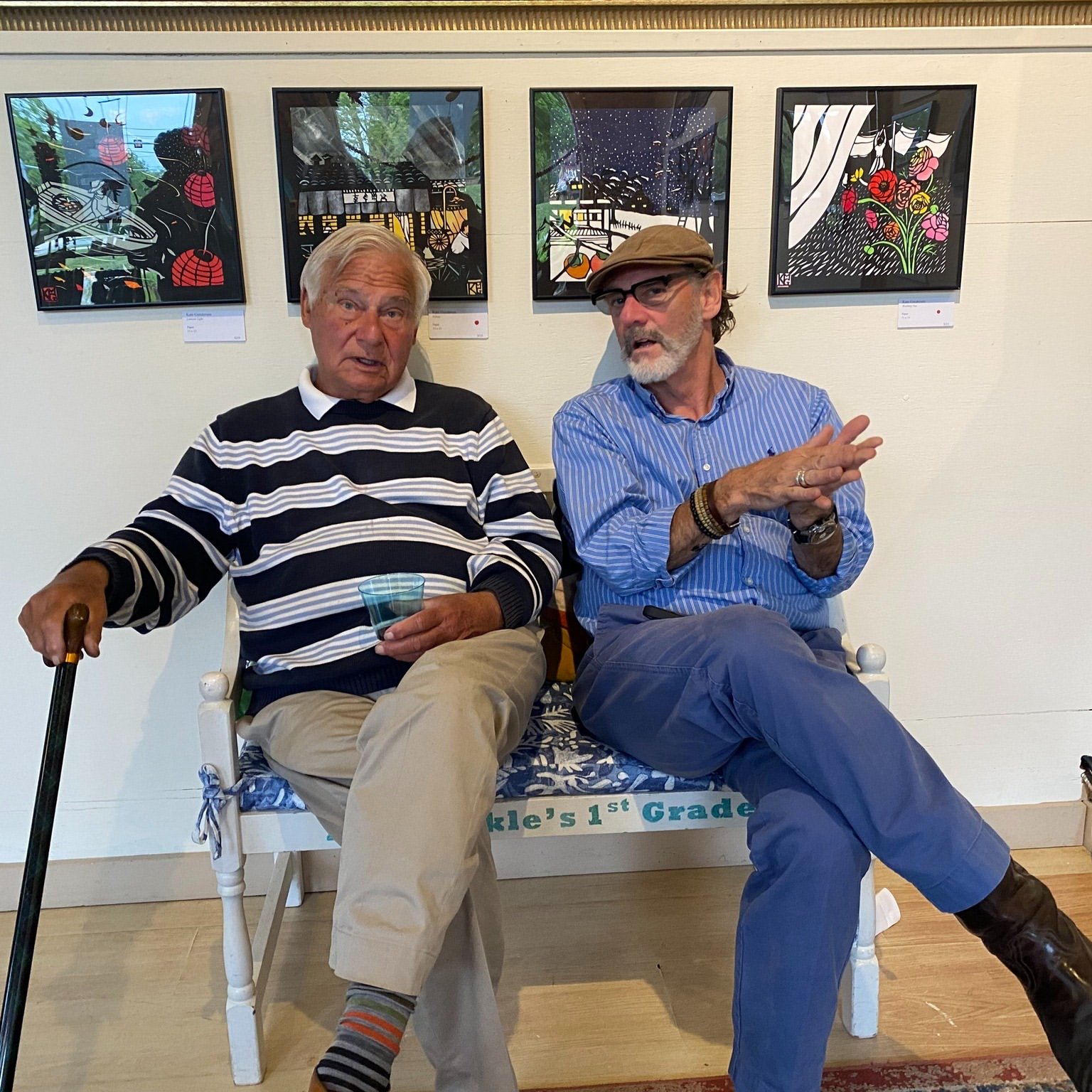
We had another great opening reception at Frame Gallery on Friday night for our current exhibition, "A Lamp, a Ladder, or a Lifeboat: Meditations in Paper Inspired by Rumi."
The highlight was hearing Kate Gundersen and Kim Phillips talk about how they execute their intricate paper-cut drawings. It is a fascinating and surprising process that goes into their finely detailed work.
It was a terrific crowd, with new faces brought in by the artists alongside our stalwart regulars. We’ve already sold five pieces as of Saturday (and are keeping them in situ for now), so there is still time to enjoy the exhibition, which will be on display through May 30. We are here Tuesday-Saturday, 10-5.